
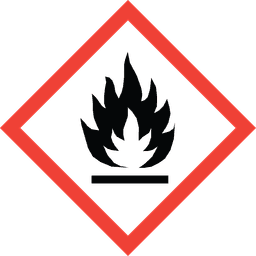
GHS pictogram
GHS02 — Flame
Flammable gases, aerosols, liquids and solids, plus pyrophoric, self-heating, and water-reactive substances.
Hazard classes this pictogram signals
- Flammable gases/aerosols/liquids/solids
- Pyrophorics
- Self-heating substances
- Substances that emit flammable gas with water
Hazard statements that carry GHS02
These H-codes trigger the Flame pictogram at the categories where it applies.
- H220Extremely flammable gas
- H221Flammable gas
- H222Extremely flammable aerosol
- H223Flammable aerosol
- H224Extremely flammable liquid and vapour
- H225Highly flammable liquid and vapour
- H226Flammable liquid and vapour
- H228Flammable solid
- H230May react explosively even in the absence of air
- H232May ignite spontaneously if exposed to air
- H242Heating may cause a fire
- H250Catches fire spontaneously if exposed to air
- H251Self-heating in large quantities; may catch fire
- H252Self-heating in large quantities; may catch fire
- H260In contact with water releases flammable gases which may ignite spontaneously
- H261In contact with water releases flammable gas
All nine GHS pictograms


Stop looking up codes by hand
GHSLogic reads the hazard and precautionary statements straight off your supplier SDSs, classifies the whole mixture across every GHS endpoint, and drafts a review-ready SDS and labels.
Reference information, not a compliance determination. The pictograms on a finished label depend on the full classification of your specific mixture and require review by a qualified professional.