
The nine GHS hazard pictograms
GHS defines nine hazard pictograms — red-bordered diamonds that appear on Safety Data Sheets and labels. Each signals a specific set of hazard classes. Select any pictogram for its full meaning and the hazard statements that trigger it.

GHS01 — Exploding bomb
Explosives, self-reactive substances, and organic peroxides that can explode.

GHS02 — Flame
Flammable gases, aerosols, liquids and solids, plus pyrophoric, self-heating, and water-reactive substances.

GHS03 — Flame over circle
Oxidizers — substances that can cause or intensify a fire.

GHS04 — Gas cylinder
Gases stored under pressure, including compressed, liquefied and refrigerated gases.

GHS05 — Corrosion
Substances corrosive to metals, and those causing severe skin burns or serious eye damage.
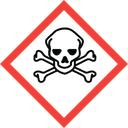
GHS06 — Skull and crossbones
Substances with acute toxicity (oral, dermal or inhalation) in the higher-hazard categories.

GHS07 — Exclamation mark
Lower-tier acute toxicity, skin/eye irritation, skin sensitization, respiratory irritation and narcotic effects.

GHS08 — Health hazard
Serious longer-term health hazards: carcinogenicity, mutagenicity, reproductive toxicity, respiratory sensitization, STOT and aspiration.

GHS09 — Environment
Substances hazardous to the aquatic environment (acute Category 1 and chronic Categories 1–2).
Stop looking up codes by hand
GHSLogic reads the hazard and precautionary statements straight off your supplier SDSs, classifies the whole mixture across every GHS endpoint, and drafts a review-ready SDS and labels.